Contacts
Get in touch
Close

Contacts

McMaster Innovation Park
Canada, ON L8P 0A1

+1 (905) 9797 626

info@rozor.ai

Technology Platform

A unified autonomy foundation engineered through real-world deployment

ROZOR’s technology platform brings together sensing, AI vision, navigation, hardware architecture, and secure data systems into a single, scalable autonomy foundation for indoor robots and autonomous vehicles.

Each layer is developed through applied research, validated in controlled and live environments, and designed to operate independently or as part of a fully integrated system—enabling reliable autonomy from perception to actuation.

Call us today:

Modular autonomy layers powering adaptable robotic systems

ROZOR’s platform is built as a layered autonomy stack, where sensing, intelligence, and system infrastructure are developed as modular yet interoperable components.


This design allows the same core platform to adapt across different robotic form factors, environments, and operational requirements—without redesigning the entire system.

Autonomy Stack
0 Layer
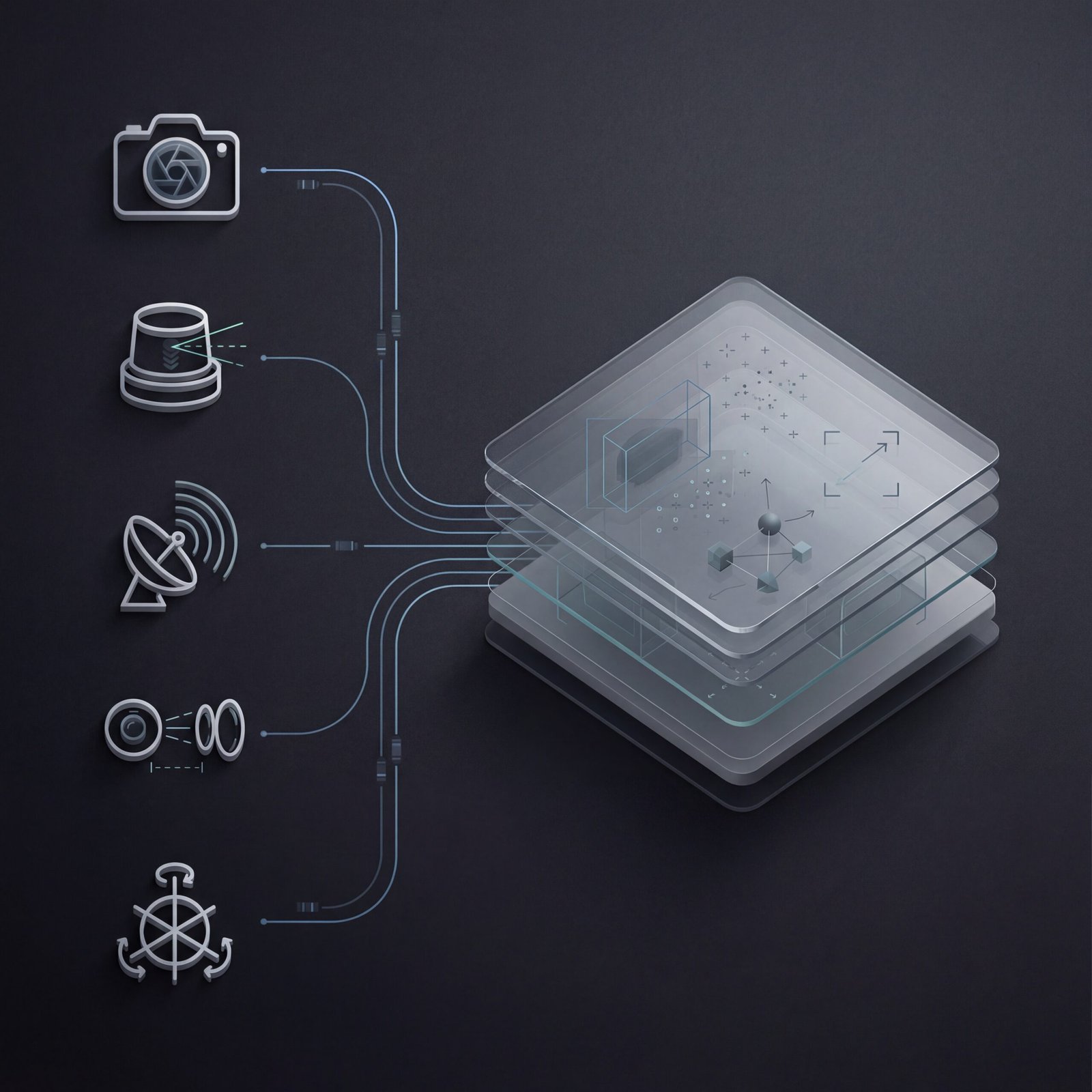
Sensing & Perception

Multi-modal sensing combining cameras, LiDAR, radar, and inertial data to build a reliable understanding of the environment.
AI Vision & Decision Intelligence

Onboard AI models process sensor data for perception, object understanding, and real-time decision-making.
Navigation & Control

Localization, mapping, and path planning systems guide safe, efficient motion across structured and unstructured indoor environments.
Hardware & System Architecture

Integrated compute, power, and actuation infrastructure designed for real-time autonomy and long-duration operation.

Client Satisfaction
0 K+

technology Core autonomy layers of our platform

What it does

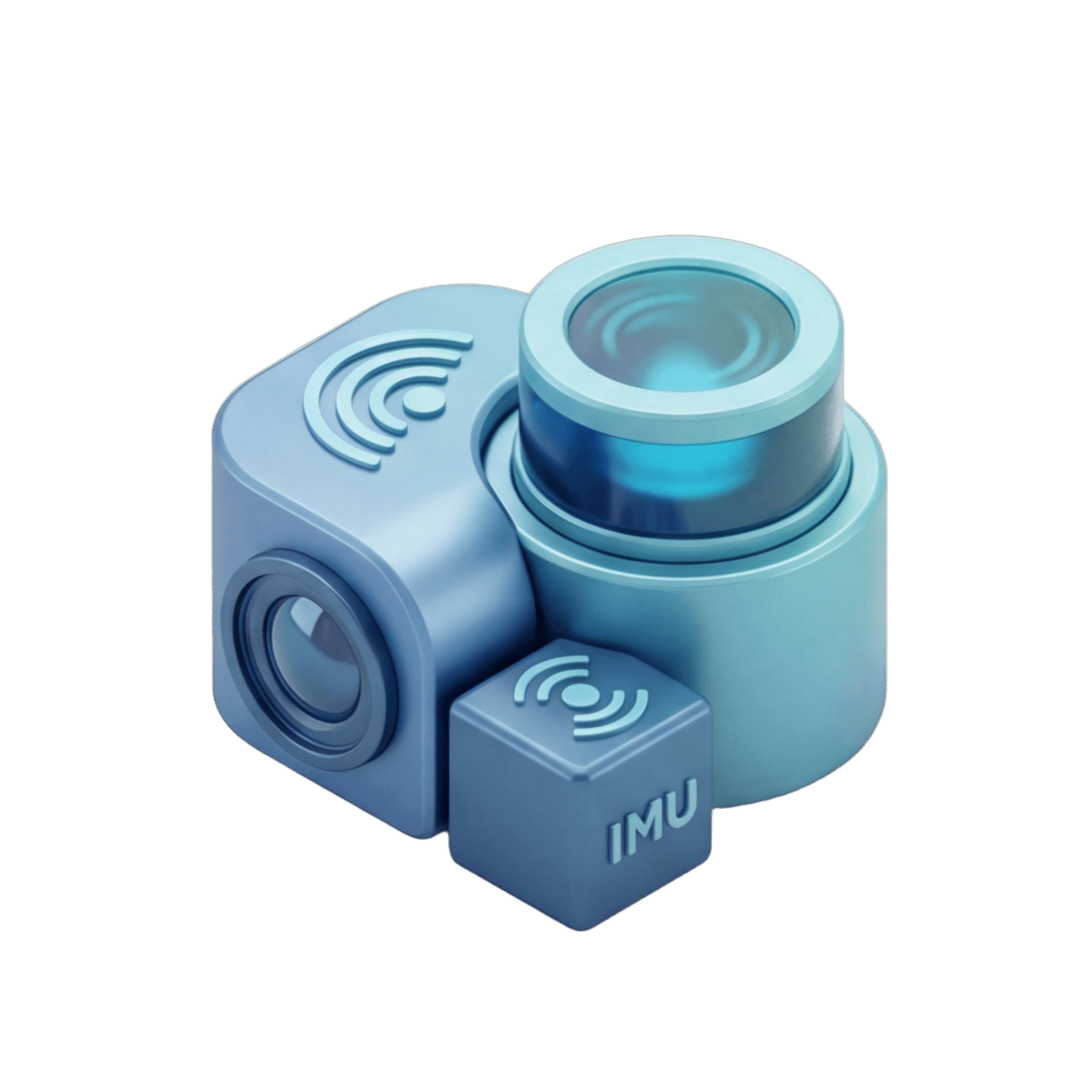
The AI Vision layer enables autonomous systems to perceive, understand, and track indoor environments in real time, transforming raw sensor inputs into a stable and actionable representation of the world.

By combining data from cameras, LiDAR, radar, depth sensors, and inertial measurements, the system maintains reliable perception even under noise, occlusion, or changing conditions.

This layer provides spatial awareness that feeds navigation, interaction, and downstream autonomy modules, ensuring dependable situational awareness in GPS-denied indoor environments.

What it does

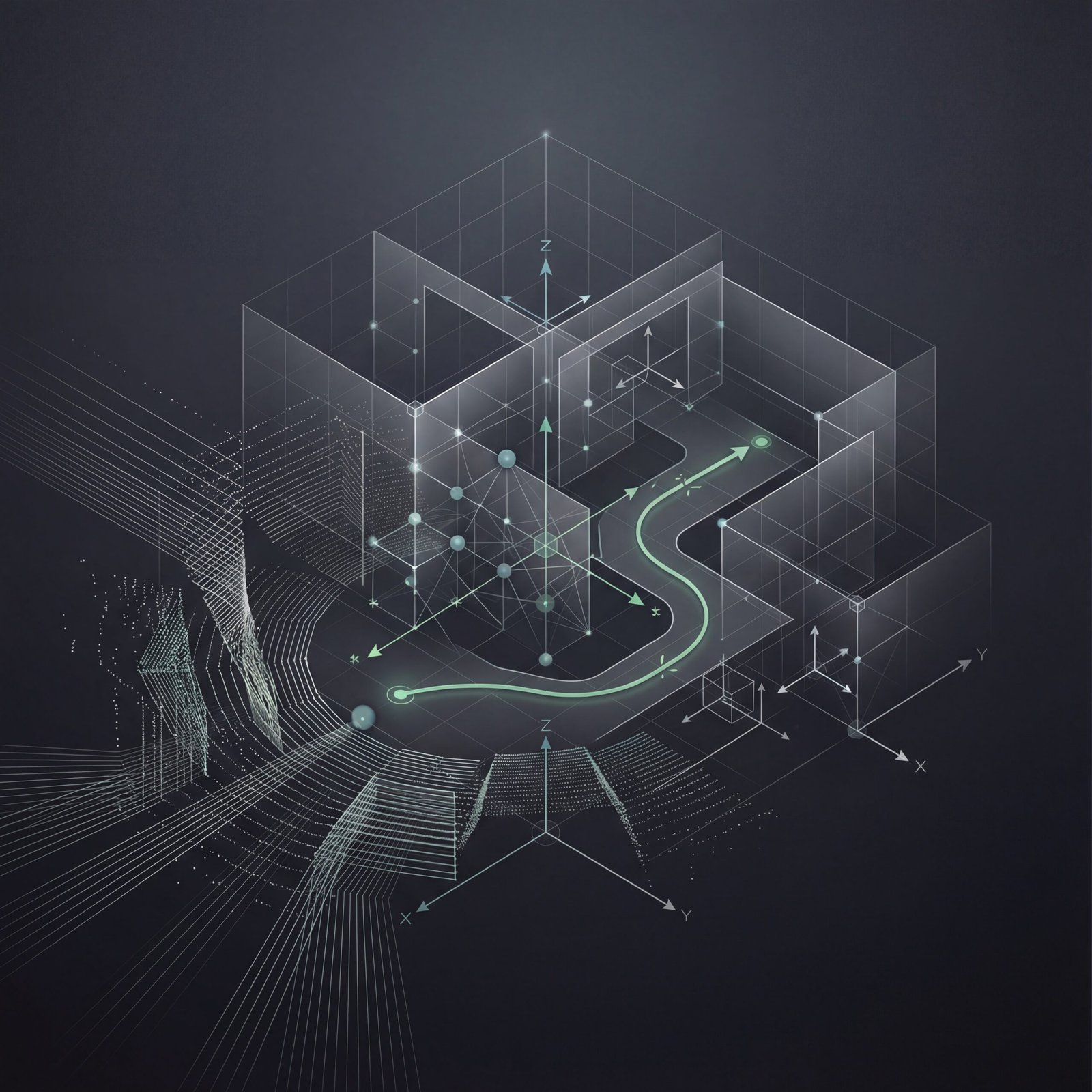
The Navigation and Mapping layer enables autonomous platforms to localize themselves, build maps, and move safely through indoor environments without relying on external positioning systems.

Using visual-inertial and LiDAR-based SLAM techniques, the system continuously estimates position while incrementally constructing and refining maps.

As environments change, the navigation stack adapts in real time, supporting path planning and obstacle avoidance for consistent and safe indoor mobility.

What it does

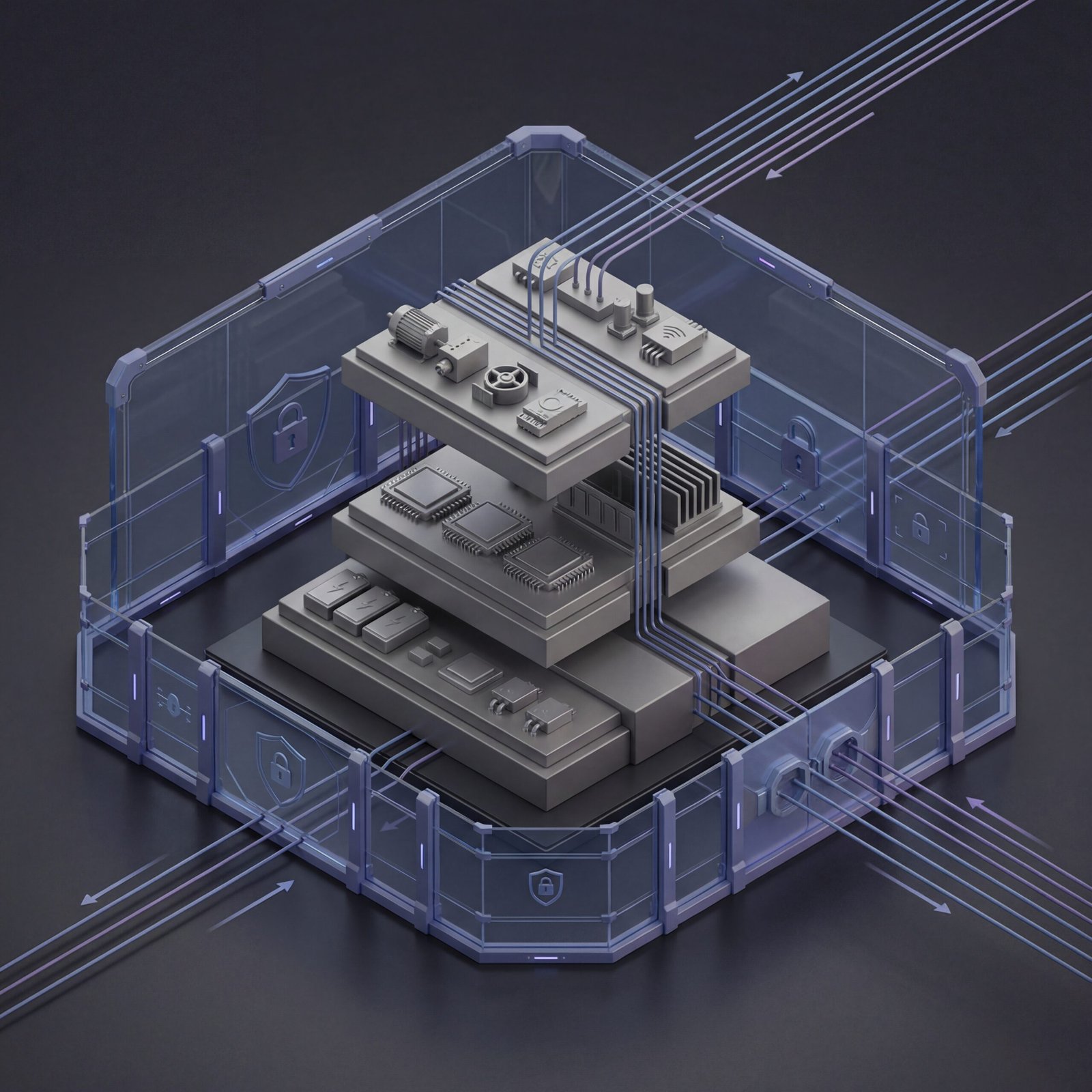
The systems infrastructure layer defines how compute, power, actuation, and secure data services are integrated into a modular and maintainable foundation for autonomous operation.

This layer supports flexible hardware integration across platforms while enabling secure communication, encrypted data handling, remote updates, and continuous system monitoring.

By combining physical architecture with secure data infrastructure, the platform supports long-term deployment, fleet-level oversight, and reliable autonomous operation at scale.

0 +

Sensor Modalities

Camera, LiDAR, radar, depth, and inertial sensing fused in real time.

0 Loop

Closed-Loop Autonomy

Continuous feedback between sensing, decision-making, and execution.

research & development Research-driven autonomy, validated in real-world environments

Field Testing & Deployment
Systems are evaluated in real indoor environments to assess behavior under real-world constraints such as noise, dynamics, and environmental variabilit
Data-Driven Iteration
Measured performance data feeds back into system design, driving continuous refinement across perception, navigation, and infrastructure layers.
Prototyping & Lab Validation
Validated concepts are implemented on real hardware and tested in controlled laboratory environments to measure performance, robustness, and system lim
Simulation & Modeling
System behavior and autonomy logic are first developed and tested in simulation, enabling rapid experimentation and early validation before hardware de

Subscribe for latest updates & insights

Get concise, expert briefings on AI-driven robotics, pilot programs, safety best-practices and real ROI from ROZOR